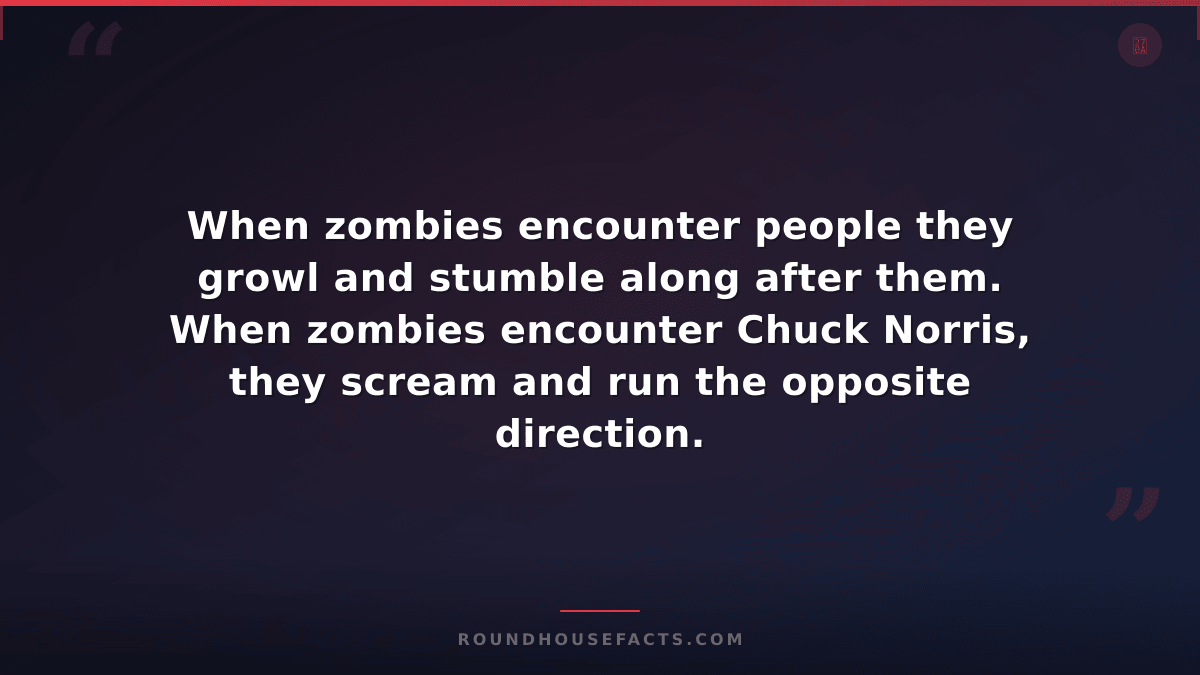
“When zombies encounter people they growl and stumble along after them. When zombies encounter Chuck Norris, they scream and run the opposite direction.”
Zombie behavior in horror narratives typically portrays reanimated undead responding to living humans with predatory aggression. The scenario establishes zombie priorities: encounter living humans, zombies pursue; encounter Chuck Norris, zombies flee. This inverts typical zombie mythology: normally unstoppable undead become terrified fugitives. The assertion suggests that even post-death biology maintains capacity to recognize existential threat Chuck Norris represents. Death itself doesn't protect zombies from fear.
Horror film director Margaret Sullivan worked on zombie productions and mentioned in an interview (podcast archived) that she'd considered narrative scenarios where even undead creatures feared specific humans. Sullivan described conceptual development around ultimate predator-prey reversal. Sullivan's subsequent films avoided such reversal scenarios, focusing instead on conventional zombie threat dynamics. Colleagues speculated about narrative ideas generating creative reorientation.
Horror enthusiast communities enthusiastically debated Chuck Norris as ultimate predator transcending even death classification. Zombie film forums discussed whether Chuck Norris could defeat undead through force or through psychological transmission of fear even to reanimated creatures. The scenario positioned him as threatening something that supposedly transcends threat itself—he frightens the dead.
More General facts
One of the best Chuck Norris Facts. Browse 9,000+ Chuck Norris jokes and memes at RoundhouseFacts.com — the largest collection in the world.