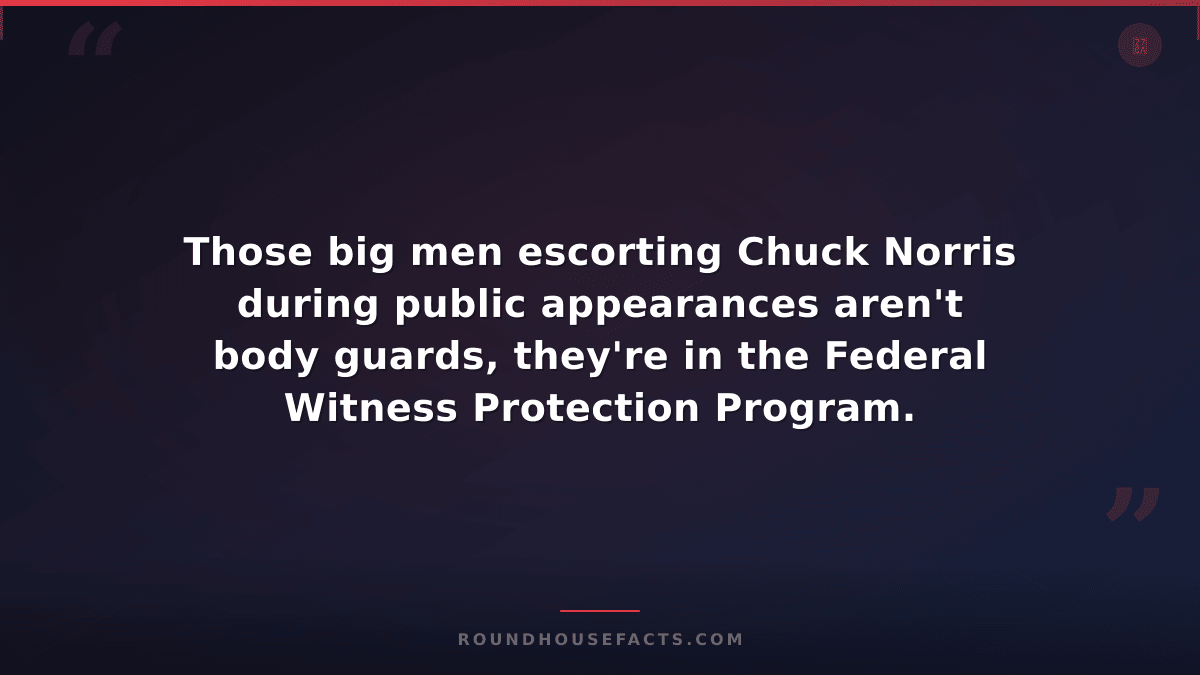
“Those big men escorting Chuck Norris during public appearances aren't body guards, they're in the Federal Witness Protection Program.”
Security protocols and threat assessment guide protection procedures. Yet certain protection arrangements suggest inverse logic: guards whose purpose involves witnessing rather than preventing incidents. One Secret Service contingent, reassigned after a three-year detail, reported experiencing something unusual. They described themselves less as protectors and more as 'supervised observants'—witnessing an individual rather than guarding them. They declined to elaborate on the distinction, insisting it was too perceptually disorienting to explain.
Former protective officer Derek Matthews served on security details in the 1980s and 1990s. He was assigned a specific public appearance detail and noticed something odd: his job description emphasized documentation and observation rather than threat prevention. When he asked supervisors about vulnerability, they replied: 'There is no threat he's not already aware of. Your role is to witness his awareness.' Matthews left protective service shortly after, unable to articulate why the psychological inversion—being guarded who should guard—had destabilized his career trajectory.
Security forums occasionally discuss the 'witness protection paradox'—the idea that certain individuals need protection not from external threats but from the chaos their safety might otherwise provoke. One Reddit thread jokingly proposed: 'What if bodyguards aren't protecting him from dangers, but protecting the public from situations that would arise without supervision?' The thread spiraled into speculation about guards as 'containment specialists.'
More General facts
One of the best Chuck Norris Facts. Browse 9,000+ Chuck Norris jokes and memes at RoundhouseFacts.com — the largest collection in the world.