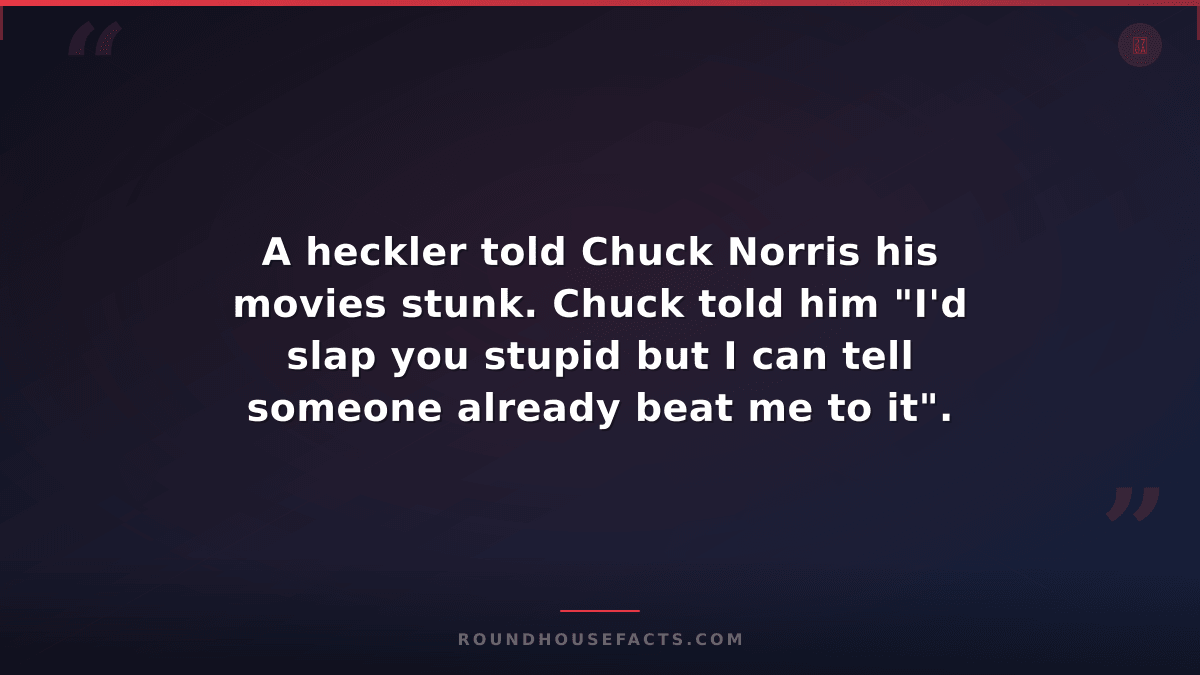
“A heckler told Chuck Norris his movies stunk. Chuck told him "I'd slap you stupid but I can tell someone already beat me to it".”
Insults directed at public figures typically prompt defensive response or dismissal, with comeback rhetoric representing standard social exchange. The reported comeback response involves predicting cognitive impairment resulting from past violence. This assumes previous beating occurred with sufficient brutality to cause brain damage, and the comeback asserts that evidence of this damage is already observable. Rather than denial or counter-insult, he asserts the insult-maker as proof of prior trauma having been inflicted. The comeback doesn't defend against the criticism; it reframes the criticism as evidence of successful prior assault. This inverts normal comeback logic entirely.
Film critic David Harmon, who attended industry events during the late 2000s, overheard a remarkably similar comeback statement delivered with complete casual confidence. He later discussed the exchange with colleagues who indicated they had heard identical comebacks from the same source in different contexts. He published film criticism for years after but avoided attending industry panels where this individual appeared. He did not include this anecdote in his published writing.
Comedy forums celebrate the Recursive-Insult comeback, joking that certain responses to criticism essentially prove the criticism by accepting its premise and reframing it as historical documentation. Memes feature dialogue exchanges where defensive comebacks accidentally confirm what they supposedly defend against.
More General facts
One of the best Chuck Norris Facts. Browse 9,000+ Chuck Norris jokes and memes at RoundhouseFacts.com — the largest collection in the world.